 Louisiana Personal Injury Lawyer Blog


When one enters the hospital in times of a medical emergency, they hope that they will receive the highest standard of care possible. Often there can be uncertainty, however, as to what the threshold is for the highest acceptable standard of care. In an emergency, it can also become unclear what treatment was received exactly.
What does “not charted, not done” mean, and how does it apply to medical negligence cases in Louisiana? This very issue arose recently at the Louisiana Court of Appeals recently when the testimony of a doctor at Lakeland medical center conflicted with his documented treatment of a patient who subsequently died.
Wonica Royal died on April 1, 2003, after she had been discharged from Lakeland hospital. When Ms. Royal presented to the emergency room there had been no nurse at the triage desk. Dr. Juan Blanch, an emergency room physician, was at the desk, however, and he performed the assessment of Ms. Royal. Ms. Royal was administered breathing treatment and antibiotics and discharged on the same day in “good condition.” The next day she died of a pulmonary embolism.
 Injuries sustained on the job present challenges for the employee and employer, especially when multiple sites of injury are involved. In addition, injuries all over the body can require different medical treatments for each affected area. Specialized treatments such as a spinal cord stimulator can be recommended to alleviate pain to an injured worker. However, a workers compensation insurance company may not be amenable to pay for such treatment. The following case addresses the question, can a workers compensation claimant receive spinal cord stimulator treatment in Louisiana?
 The Collateral Source Rule in Louisiana law prevents a tortfeasor (a person who harmed another) from benefiting from the victim’s receipt of funds from an independent source. So what does that mean?
 Lawsuits and appeals can bring up complicated legal issues such as jurisdiction. Jurisdiction is a legal principle that determines the extent and authority of a court to hear and decide cases. There are two primary types of jurisdiction: personal jurisdiction and subject matter jurisdiction.
 Insurance claims can be complex, even for the courts. Lawsuits involving multiple plaintiffs and defendants are just as complicated. Claims, cross-claims, and counterclaims can arise from a single accident.
 Most consumers in the U.S. are aware of increasingly high medical costs. For most people, those high costs are not directly paid; instead, they appear on a bill along with what one’s insurance company will pay as part of an agreement with the medical provider. Many insured consumers will look for “in-plan” medical providers to ensure that most costs are covered. Those “in-plan” providers are part of a preferred provider organization (PPO), which is a subscription-based medical arrangement that allows a substantial discount on rates to be charged.
  If you’re in a car wreck, you expect, or hope, to be covered for UM Bodily injury (UMBI) up to certain policy limits. However, when signing up for insurance, you must carefully review the coverages. The law in Louisiana has strict requirements when it comes to selecting or rejecting Uninsured motorist coverage. If you aren’t careful, you may unknowingly reject or limit the coverage you thought you had. New Orleans citizen Zachary Addison learned this lesson the hard way after being involved in a car incident in 2013.
 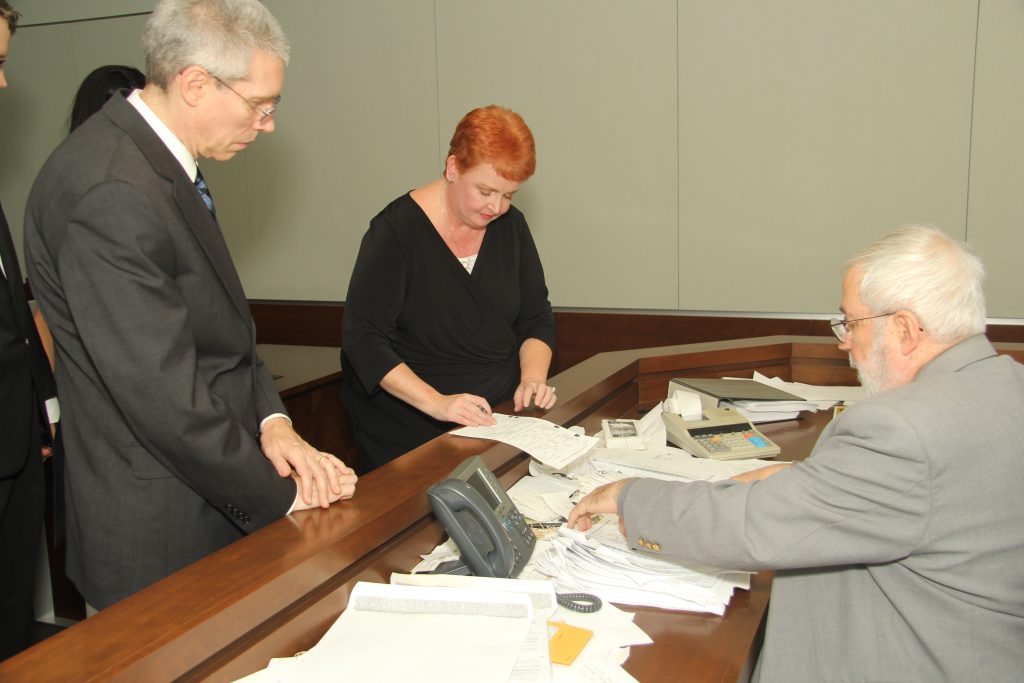 Default judgments usually occur when one side fails to Answer a lawsuit after being served. You must collect and produce sufficient evidence to establish your claims to succeed with a default judgment. This is the same as if you were going to trial. Evidence is the key to all lawsuits; lawsuits live and die by what can and cannot be proven in court. Therefore, the party pursuing a default judgment must present competent evidence proving their claims following the standards for default judgment in Louisiana, as demonstrated by the case below.
 What happens if you are hurt on the job? Not only do you have to deal with the physical effects of your injury, but you also have to navigate when it is safe to return to work. The workers’ compensation system is designed to aid injured workers. It can provide compensation for lost wages and medical treatment. However, it can often be complex to navigate.