 Louisiana Personal Injury Lawyer Blog


 Activities on the water carry inherent risks. If you are injured while on the water, laws of admiralty and maritime jurisdiction generally rule. There are also allowances to invoke admiralty jurisdiction for injuries on land. To do so, one must satisfy conditions of both location and connection with maritime activity. But what happens if you are injured on a boat on land? Can you file a lawsuit with maritime claims? The following lawsuit out of Manchac, Louisiana, helps answer this question in the context of a prescription argument.
Eddy Welch filed a lawsuit in October of 2013 against Jefferson Daniels to recover damages from bodily injuries he sustained from being a guest passenger on Daniel’s boat. While Welch attempted to come down from the boat’s upper level, a piece of steel rail caught his arm, and he sustained injuries. Welch claimed the injury was from a defect that posed an unreasonable and foreseeable risk of harm.
Procedural jostling caused Welch’s lawsuit to be transferred to another parish. Welch subsequently filed his amended petition with the new trial court, stating the incident falls under admiralty jurisdiction. Daniels then filed a motion for summary judgment and exception of prescription set forth under La. C.C. art. 3492.
 A disabling workplace injury can be a nightmare for an employee who suffers physical pain, mental side effects, loss of income, and the uncertainty of litigation. And when large sums of money are involved, an employer will want to fight tooth and nail to avoid liability. This can be particularly distressing when an employee wins at trial only to find the decision has been appealed.
  Hydraulic steering is part of modern-day recreational vessels. When a boat’s hydraulic steering fails, what party bears liability? The owner, driver, or manufacturer? In the following case, the Louisiana 3
 Medical conditions can be a sensitive topic for both employers and employees. While employers are extremely cautious in not asking discriminatory questions, the employees may still be reluctant and afraid to lay all cards on the table. Understandably, workers who suffer from pre-existing medical conditions feel that they don’t need to inform their employers as long as the illnesses are not getting in the way of work. But should they? A recent case from Lousiana Fourth Circuit illuminates the legal consequences where the employee lied on the medical forms and later requested worker’s compensation.
 Imagine an injury on a ladder, lawnmower, boat, or other manufactured product. The product might appear defective; however, is defectiveness sufficient to win a lawsuit against the manufacturer? Under Louisiana law, to prevail in a lawsuit alleging medical injuries from a defective product, a plaintiff must provide adequate medical evidence to support that the injuries likely resulted from the defective product. This is referred to as “medical causation.” Without establishing medical causation, you may not be able to recover for your injuries.
 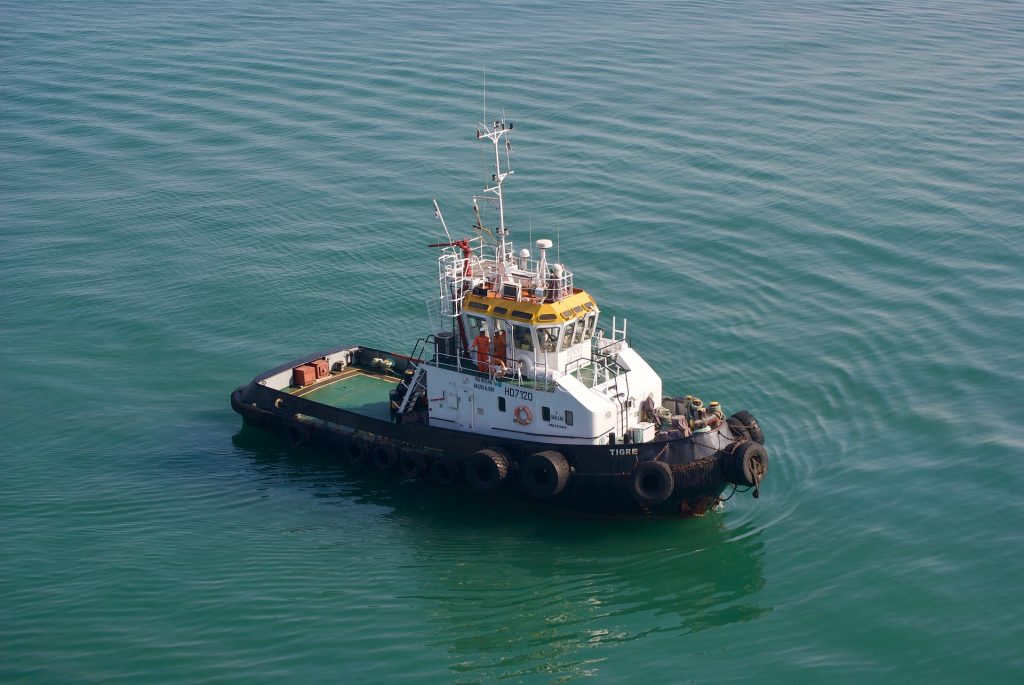 In the workplace, providing a safe environment through training, communication, and safety standards can help create an injury-free workplace. Yet, despite every precaution, accidents can still happen and then the situation becomes one of determining whose negligence caused the injury. This issue was explored in a maritime action filed on May 9, 2012 in the Twenty-Ninth Judicial District Court for the Parish of St. Charles.
  What happens when a person is injured due to a company’s negligence and the company is based outside of the United States? The plaintiff generally must file a lawsuit in federal court, but there are certain jurisdictional requirements that have to be met. A plaintiff’s ability to file a lawsuit against an international company in a U.S. district court depends on how much “contact” the company has with the United States.
 For any legal claim, there is a set period of time for which the claim must be brought. This set period of time is known as a statute of limitations, which can vary based on the type of claim. If a claim is not filed prior to the expiration of the statute of limitations, the right to bring the claim is extinguished. Furthermore, if an attorney was retained to bring the claim and failed to do so in a timely manner, the attorney may be sued for malpractice. So, in Louisiana can you sue your lawyer for not filing your claim on time?
 In almost every lawsuit, both sides present expert witnesses that have completely different views of the same situation. It is important to have an excellent attorney at trial because by the time the lawsuit is appealed, these witnesses are gone and the opinions they reached are part of the record. To overturn a trial court’s decision, an appellate court must find some glaring factual or legal error. If there are no such errors, it is very hard for the appellate court to second-guess the trial court’s decision. So, how can you prove negligence on appeal? This was the case for a Baton Rouge shipping company in their case against an insurance company.
 Insurance policy language is carefully crafted to limit the areas of coverage. A Ponchatoula area boating business tried and failed to extend their insurance policy coverage for accidents on the water to a land-based crane accident. So what happens when you try to cover a land based accident with maritime insurance?