Louisiana Personal Injury Lawyer Blog


 Below is a case of a home sale in St. Bernard Parish that didn’t go all too well. In this case, communications between the parties to the sale were delayed and the sale never went through. The case highlights the need to be diligent when buying or selling real estate and the necessity of having a good real estate lawyer.
The sellers, David and Gwendolyn Hopkins, placed a home for sale in Arabi, Louisiana. Juanita Coco, an interested buyer, contracted with a representative of Prudential Realtors in order to buy that same home. Both the Hopkins and Ms. Coco signed an Act of Sale agreement that was contingent upon Ms. Coco being able to obtain financing in the amount of $152,200. The Act of Sale, by agreement, was supposed to be completed by a deadline of April 4, 2008, with the option to extend the deadline.
Ms. Coco hired an appraiser to determine the value of the home. The appraiser told Ms. Coco that because the house was located in an area that was previously affected by Hurricane Katrina, the appraiser had to list the home at a value that was considerably less than the asking price. The original asking price of the home was $152,500 and the appraisal price was $147,000. Since it was appraised below the asking price, Ms. Coco’s lender, Countrywide Bank, stated that it would not approve Ms. Coco’s home loan if the asking price was not reduced. The Hopkins signed an amendment to the original Act of Sale to have the original price reduced to the appraisal price. They faxed it to Dane Ruffins, a Prudential representative, after business hours on April 3, 2008. Ms. Ruffins did not receive the amendment until the morning of April 4, 2008. The same day that, Ms. Ruffins also received a letter from Countrywide Bank stating that the loan would not be approved.
 Sometimes even the best-planned of deals amongst parties may fall through. Parties often turn to the courts to resolve contractual disputes. When a court is interpreting a contract between two parties, it is often as simple as applying the “four corners” rule. I.e. it will not look at anything outside the four corners of the contract. This particular method of interpretation is useful (and under Louisiana law mandatory) where a contract is written clearly and is not ambiguous. In a recent case, the Louisiana Fourth Circuit Court of Appeal upheld this method of interpretation when faced with a contract dispute out of Orleans Parish.
 When the government takes privately owned property to be used for the benefit of the public, it is called an expropriation. Federal and state law prohibit the government from taking private property without compensating the owner. The Louisiana Constitution provides that property shall not be taken or damaged by the State except for a public purpose and with just compensation paid to the owner of the private property. A landowner whose property is expropriated by the State is to be compensated so that he remains in the equivalent financial position he enjoyed before the taking. The following case provides a concrete example of such a situation.
 Expropriation is the act of the government taking privately owned property and using it for the benefit of the public. Generally, most expropriation cases deal with the construction of public roadways and highways. Where the land is expropriated, the private landowner is generally compensated. In one particular matter involving the expropriation of land to build a highway, valuing the trees on the land became more troublesome than anticipated.
 When purchasing property, buyers should be aware of rights reserved by others in the deed. Certain reservations of rights made by an original owner can continue to haunt a parcel of property through successive conveyances and multiple owners. In Louisiana, the language in a deed can create a personal servitude, a charge or burden on a piece of property for the benefit of another person. Personal servitudes are not automatically extinguished at death and may be inheritable by descendants of the beneficiary. For example, a seller may reserve hunting rights for his or her family on the newly purchased property for generations. Needless to say, disputes often arise regarding the breadth and depth of such reservations. When interpreted by a court, the intent of the original parties in negotiating the reservation is key, as shown by a recent decision of the Louisiana Third Circuit Court of Appeal.
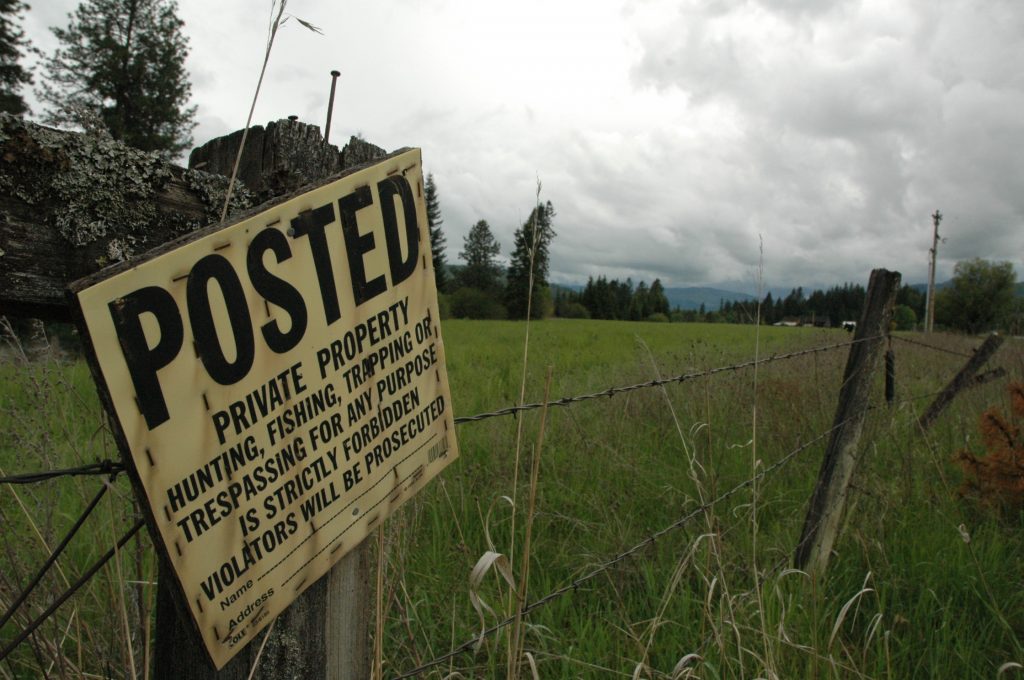 Property disputes can be complicated and confusing, so it is important to hire an excellent lawyer capable of untangling all of the issues involved in the case. Plaintiff Don Whitlock owns property in East Carroll Parish, Louisiana and brought a petition against Defendant Fifth Louisiana District Levee Board and its lessee, Jamie Isaac, seeking a preliminary and permanent injunction to prevent the defendants from trespassing on his property when they travelled across to access a hunting lease owned by the defendant Levee Board that is located west of Plaintiff’s property. Mr. Whitlock farms on the three lots of land at issue and alleged Issac caused damage as he crossed all three lots, creating ruts in the soil, damaging crops, and changing the flow of water. The defendants, however, argued that the land was conveyed to plaintiff’s ancestor with a public right of passage in the deed, and thus there could be no suit for trespass. The Trial Court agreed and with the defendants and held that there was no cause of action. It also held that since Mr. Whitlock was not the sole owner of the land (there were other owners on two of the three lots), he failed to join all the parties and further lacked the capacity to sue in a representative capacity for the other owners. Finally, it took a “strange” step in ruling on the merits of the preliminary injunctions despite the fact that it had sustained the exceptions raised by the defendants. It held that preliminary injunction could not be granted because Mr. Whitlock failed to show irreparable harm. Thus, the Trial Court dismissed the case. On appeal, Mr. Whitlock argued that the Trial Court’s rulings were improper.
 Many Americans do not know that it is actually possible to legally acquire another person’s land without possessing fair title or good faith. Of course, specific guidelines must be followed, but with some will, knowledge, and close attention to detail, this process known as “adverse possession” can be surprisingly simple to accomplish.
 If you fail to make payments on a mortgage you may lose your home, but you may also be held liable for any remaining debt after your home has been sold. If the sale of your house does not pay off the balance of what you owe, the institution owning the mortgage may come after you for a deficiency judgment. A deficiency is essentially the balance remaining on the loan after the sale of the property. For example, if a homeowner with a $100,000 mortgage defaults and the bank sells their home for $75,000, there would be a $25,000 deficiency. The owner of the debt may be able to come after a person for the deficiency.
 A redhibitory defect is a problem with an article that renders it useless to the buyer. In Louisiana, although a seller owes no warranty for defects that are known to or should have been discovered by the buyer at the time of the sale, a seller does, by operation of law, warrant the buyer against redhibitory defects