Louisiana Personal Injury Lawyer Blog


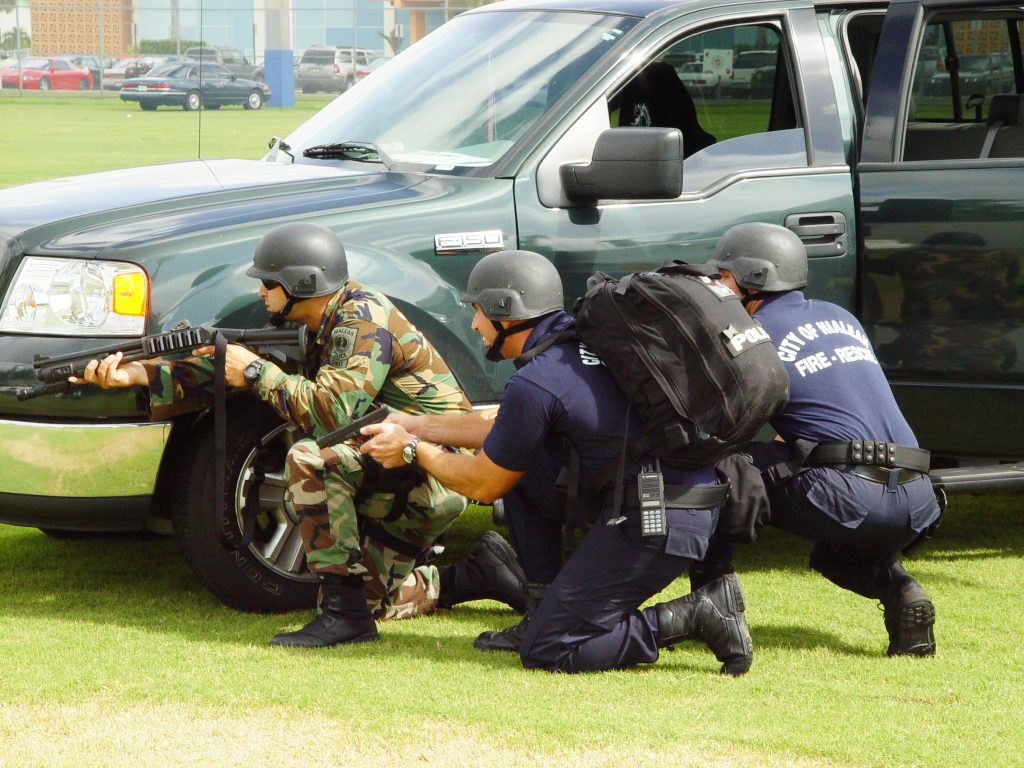 Cases with multiple defendants and multiple claims are typically complex and slow to resolve. Not all claims apply to all defendants, not all defenses apply to all claims or parties, etc. Furthermore, some defendants possess certain immunities which may allow for the dismissal of certain claims against that defendant before the remaining claims are even addressed. What happens if one claim is dismissed, the plaintiff wants to appeal that dismissal, yet the entire matter is still pending? This is the subject of a recent wrongful death case out of Metairie, Louisiana.
Maria Ibanez Sarasino, was shot and killed by a convicted felon, Miguel Rojas, while he was out on parole. Mr. Rojas was convicted of attempted second-degree murder, and his brother arranged for him to stay with Mrs. Sarasino and her husband. During the months after Mr. Rojas’ release, conflicts between him and Mrs. Sarasino’s family arose, resulting in Rojas punching Mrs. Sarasino’s daughter, Maria, in the face and giving her a black eye. Mr. Rojos’ brother Alphonso, reported to the Kenner Police Department that Mr. Rojas had stolen a handgun from his apartment. Alphonso and Maria lodged a complaint with the Jefferson Parish Sheriff’s Office about Mr. Rojas’ threats against the Sarasino family. Maria claimed that Mr. Rojas stole her husband’s gun and was threatening to shoot her and her family. The investigating officer was unable to locate Mr. Rojas so he relayed the details of the investigation to the First District and took no further action. Approximately two weeks later, Mr. Rojas’ parole officer was notified by the sheriff’s office of the complaints regarding Mr. Rojas, and attempted to locate Mr. Rojas with no luck. A week following, the Kenner Police Department issued a warrant for Mr. Rojas for theft of a firearm. Four days after the warrant was issued, Mr. Rojas went to the Sarasino residence and shot and killed Mrs. Sarasino.
The surviving family members filed a wrongful death suit against the State of Louisiana, through the Department of Corrections, the Sheriff of Jefferson Parish, the Parish of Jefferson, the Chief of the Kenner Police Department, and the City of Kenner. Against the Sheriff of Jefferson Parish, Newell Normand, the Sarasino family specifically claimed Sheriff Normand breached his duty to expeditiously execute the warrant on Mr. Rojas. They further alleged that Sheriff Normand failed to protect the public from a known danger by failing to timely arrest Mr. Rojas and by failing to properly protect the victim. Sheriff Normand filed a motion for summary judgment arguing that the Plaintiffs could not prove that he was negligent for failing to adequately protect Mrs. Sarasino, and that he was entitled to summary judgment on this issue because he was immune from liability pursuant to the discretionary immunity rule. The Judicial District Court for the Parish of Jefferson granted the motion for summary judgment on the claim for failing to protect Mrs. Sarasino reasoning that Sheriff Normand and the Jefferson Parish Sheriff’s Department were shielded by immunity. The Plaintiffs appealed to the Louisiana Fifth Circuit Court of Appeal.
 Getting seriously injured on the job is always a terrible experience, but what if it is unclear for purposes of a lawsuit who you even work for? You know that someone owes you compensation for your injuries, but in this recent case out of Natchitoches Parish that “someone” may not be where your employment application was filed.
  Navigating the criminal justice system is a scary, stressful and, often harrowing experience for anyone, but these feelings are generally exacerbated when a defendant is mentally ill. The unfortunate story of Willie Warren Harper follows as an illustration of the litigation that can arise in these situations. After being arrested for theft in 1984, Mr. Harper was admitted to Feliciana Forensic Facility (FFF), a part of Louisiana Department of Health and Hospitals (DHH). He was found not guilty by reason of insanity and, when deemed to no longer be a danger to himself or others, was to be released on the condition that the Orleans Inmate Treatment Service (OITS) would help him enter a halfway home and file for social security and welfare. However, he remained in DHH’s legal custody until 1997.
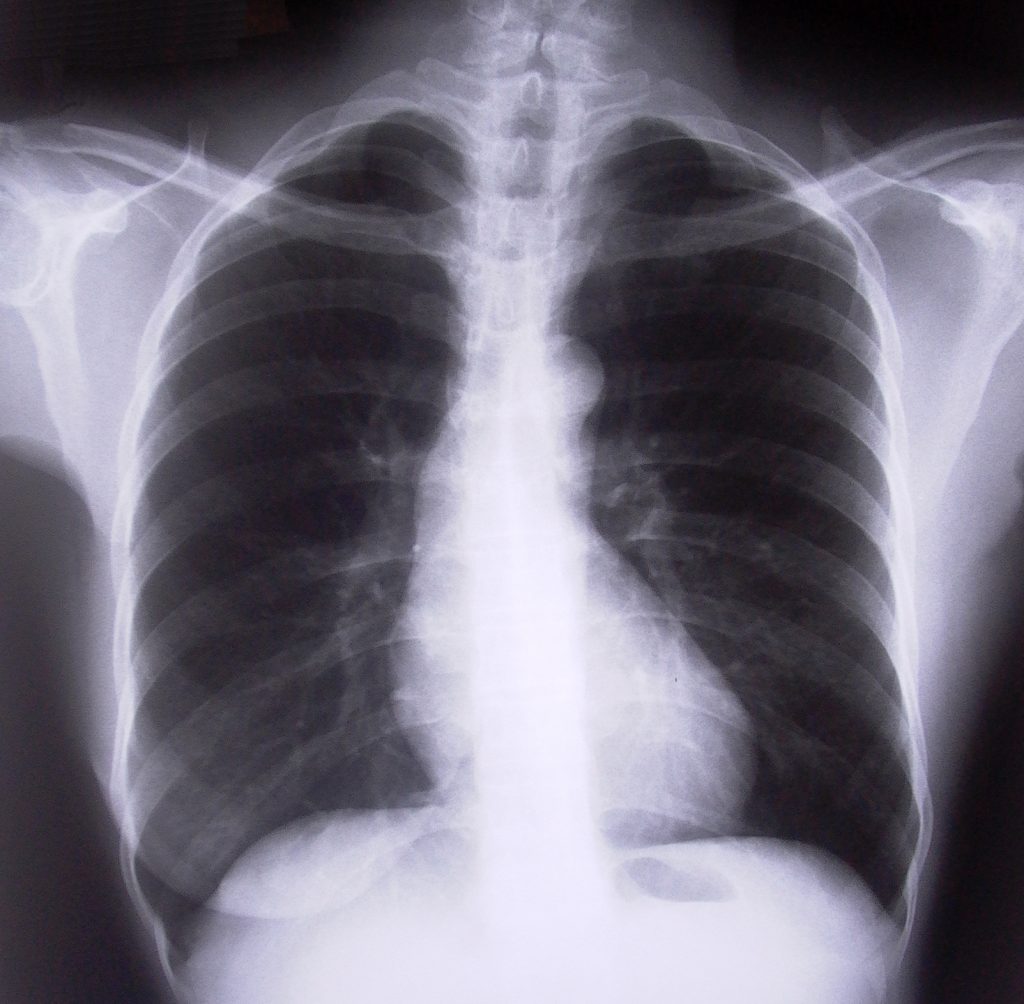 If you are injured at work, it is imperative that you follow the appropriate procedures under workers’ compensation law to ensure that you are fully and fairly compensated for your injuries. A failure to properly report or address your injuries can result in a lesser payment or no payment at all. It is also important to keep your place of employment apprised of your injuries and treatment, and written records of your contact, so that if it becomes necessary to bring an action against your employer you have sufficient evidence to support your position. A recent case of the Louisiana Third Circuit Court of Appeal is illustrative.
 Police officers are tasked with enforcing the law and upholding civic order, but what happens when a person feels that a police officer ignored his or her constitutional rights; will the officer be held accountable? A case arising out of Alexandria examines this question through the issue of excessive force and the qualified immunity defense involved in police officer shootings.
 In 2012, an independent contractor, Charles Kamrath, contracted with Creek Services, LLC to move one of their bulldozers. Kamrath had previously moved the same bulldozer with his trailer without any complications. On February 24th of 2012, Kamrath loaded the bulldozer to his trailer and commenced the transportation to Hammond, Louisiana. Unfortunately, the flatbed from the trailer detached and struck an oncoming car driven by Alice Lewis on Cullom Road in Springfield, Louisiana. The impact resulted in severe injuries to Lewis and she subsequently died shortly thereafter.