 Louisiana Personal Injury Lawyer Blog


 Owning a business can be a daunting task and often times requires the assistance of outside contractors to complete various maintenance items and to aid in the upkeep of the premises. However, many merchants and customers fail to realize that the merchant may be liable for the actions of a subcontractor. Just how liable was the subject of a recent lawsuit out of New Iberia.
In this case, Patricia Ann Thompson filed a lawsuit against a Winn-Dixie grocery store in New Iberia, Louisiana after slipping and falling on a puddle in the freezer section of the store. Winn-Dixie contracted with a cleaning service which in turn contracted with KAP Cleaning Services (“KAP”) to clean the store. KAPS’s employee rolled up a mat to clean the floor in front of the freezer where Ms. Thompson fell. Moving this mat caused water to be exposed and ultimately led to Ms. Thompson slipping and falling on the grocer’s premise and sustaining injury. The Trial Court held that Winn-Dixie was 30 percent at fault and KAP was 70 percent at fault. Yet, the Louisiana Third Circuit Court of Appeal amended the distribution of fault and held that Winn-Dixie was 100 percent liable for Ms. Thompson’s injuries. The Court of Appeal supported its decision on two grounds. First, the Court of Appeal found that Winn-Dixie as the merchant was statutorily not permitted to share liability with a subcontractor. Second, the Court of Appeal found the contractual arrangement between the two parties allowed for operational control by Winn-Dixie over KAP’s employees which would not shield it from liability for a subcontractor’s actions. Winn-Dixie appealed to the Louisiana Supreme Court.
Generally, a merchant owes a duty to those on their premises to exercise reasonable care to keep its floors in a reasonably safe condition and to keep the store free of hazardous conditions under La. R.S. 9: 2800.6. However, when a merchant hires a subcontractor it can be more difficult for a court to assign fault. Generally, a principal is not liable for the actions of a subcontractor unless the principal retains the right to supervise or control the subcontractor’s work. See Sys. Contractors Corp. v. Williams & Associates Architects, 769 So. 2d 777 (La. Ct. App. 2000). La. C.C. art. 2323 and La. C.C. art. 2324 do not eliminate or make any exceptions for a merchant’s liability under La. R.S. 9:2800.6 but rather provide for comparative fault. Louisiana courts will apportion fault based on parties’ knowledge and control over the condition that created peril. See Watson v. State Farm Fire and Casualty Insurance Co., 469 So. 2d 967 (La. 1985) Under the Watson factor test, courts assess: (1) whether the conduct resulted from inadvertence or involved an awareness of the danger; (2) how great a risk was created by the conduct; (3) the significance of what was sought by the conduct; (4) the ability of the actor, whether superior or inferior, and (5) any circumstances which might require the actor to proceed in haste without proper thought.
 Because of the highly technical aspect of seeking relief from the court system, someone unfamiliar with the legal process can be confused and frustrated by the litigation process. This circumstance can be intensified by the harm done and the matter being litigated. Mr. William Matthews, the surviving husband of Mrs. Geranda Matthews, faced this exact problem when filing a medical malpractice claim against two of his wife’s physicians and Louisiana State University Health Systems.
 Workers compensation laws require an employee to be injured within the course of employment to qualify for benefits. However, what happens when an employee is injured without any witnesses present? How can the employee prove that the accident really happened? This case out of Calcasieu Parish demonstrates the burden for a workers’ compensation claimant in Louisiana to prove an unwitnessed accident.
  Sexual harassment in the workplace is unfortunately all too common. While a victim of such harassment might feel entirely justified in filing a lawsuit against his or her employer, the harassing conduct might not be bad enough to survive a motion for summary judgment. Just how bad does a work environment have to be for a harassment victim to have a potentially successful claim? This was the issue in a recent case out of the United States Fifth Circuit Court of Appeal.
 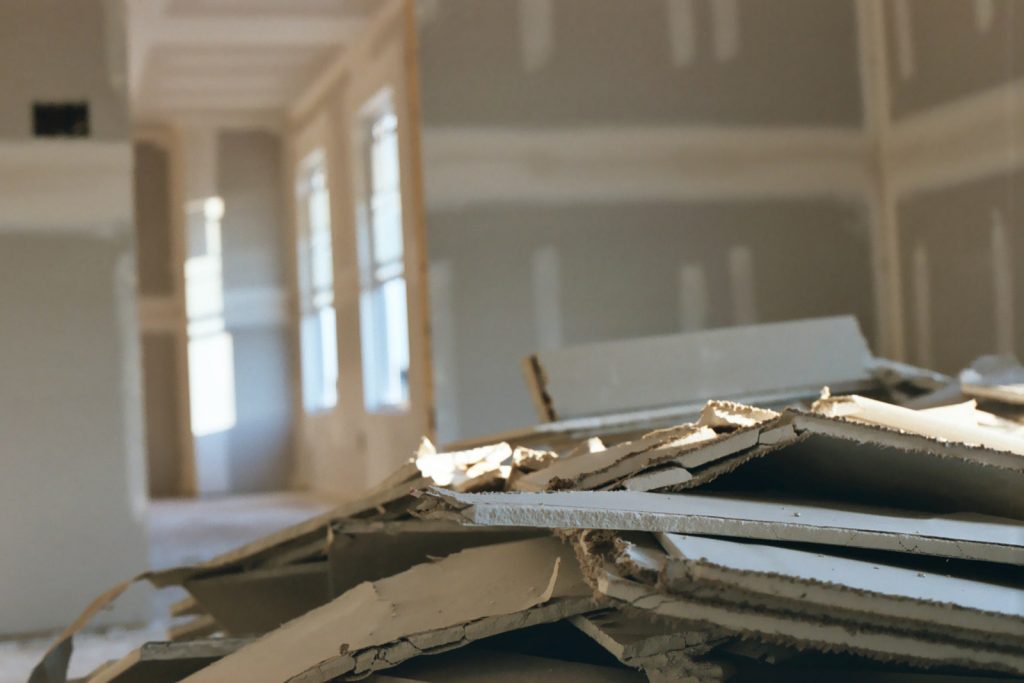 Do you know someone who owns a condo or a home? In some instances, the drywall used to construct the condo complex or home is built from Chinese-Manufactured Drywall. From 2005-2008 Chinese Drywall was imported into the U.S. and used in the construction of thousands of buildings. Strangely, residents who lived in those buildings began to notice corrosion of metal building components, failure of electrical wiring and in some cases, even physical ailments that ranged from skin irritation to respiratory problems. Ralph Mangiarelli was one the residents who suffered injuries but of a rather different kind.
  Drivers always have a duty to drive with a standard of care that can ensure the cars immediately around them are safe from a collision. But how far does that duty reach? That was the question when a Parish of Calcasieu man entered the highway from the shoulder which resulted in only the first and second cars behind him to slow down, while a third following car was forced off of the road.
  An employee injured during the course of employment is generally entitled to workers’ compensation benefits. But can the actions of the employee in their free time affect the continuation of benefits? That was the case for a Parish of Lafayette employee who decided to perform side jobs involving heavy manual labor while collecting workers’ compensation benefits.
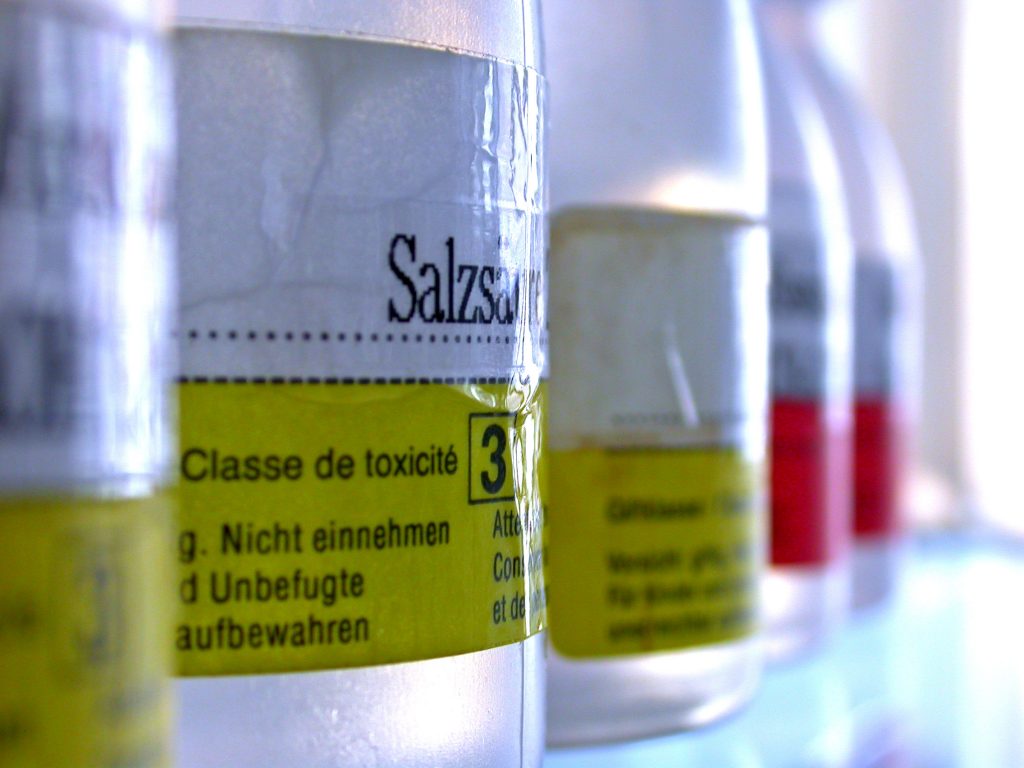 When multiple companies work together on a project that causes an injury how is liability decided between the companies? That was the case when two Parish of Jackson truck drivers and their trucks were sprayed with acid from a broken hose. The two companies in charge of the project pointed the finger at each other and tried to avoid liability. This case deals with issues of negligence in inspection and the importance of causation in a negligence claim.
 Generally, plaintiffs bring an action against an adverse party to be made whole again in some way. Bringing a claim is a remedy seeking process. But, can a claimant’s inaction cause the proceeding to be dismissed? The Louisiana Fifth Circuit Court of Appeal recently answered this question in the affirmative in a case out of Jefferson Parish.