Articles Posted in Insurance Dispute

old-truck-lublin-1449942-1024x658Has your business sought to avoid litigation over its insured business activities by negotiating an out of court settlement? Louisiana business Meyers Warehouse, Inc. (“Meyers) pursued this route assuming its insurer, Canal Indemnity Company (“Canal”), would join Meyers in settlement negotiations. However, to its surprise, Canal refused to participate in Meyers’s defense. Unfortunately for Meyers, it misinterpreted key terms within its insurance policy specifying when Canal’s duty to defend it against claims and lawsuits arises.

Meyers is the owner and operator of several trucks, trailers, and trucking operations in Louisiana. Like many businesses, it purchased insurance coverage to protect against liabilities stemming from core business activities. In November 2011, Meyers received notification that one of its shipments contained contaminated liquid sugar. The contamination caused significant damage to the client’s production line.

Meyers and the client reached a settlement agreement in lieu of pursuing litigation. The agreement transferred the liability for damages to the third party contractor responsible for cleaning Meyers’s tankers. Canal was not involved in the negotiation process. Meyers filed its lawsuit against Canal because Canal refused to participate in Meyers’s defense during the settlement negotiations arising out of the November 2011 notification. The primary dispute between the parties was whether or not Canal had a duty to defend Meyers during the settlement negotiations even though no lawsuit against Meyers was ever filed.

build-4-1213636-1-768x1024Insurance companies are coming under increasing pressure due to the recent proliferation of natural disasters in the United States. For an insurance company, navigating the boundary between legitimate and bad faith denial of claims can be a very risky business. However, courts are providing more and more guidance for insurers of companies who find themselves targeted by disaster. Recently, in Citadel Broadcasting Corp. v. Axis U.S. Insurance Co., 2014-CA-0326, the Fourth Circuit  Court of Appeal in Louisiana clarified the requirements a claimant must meet in order to receive payment  through an insurance plan.
Citadel Broadcasting (“Citadel”) was based in New Orleans at the time it sustained crippling damage from Hurricane Katrina. Prior to the incident, Citadel was insured by Axis U.S. Insurance (“Axis”) for physical damage and business interruption (“BI”) losses, including contingent business interruption income. This means that in addition to physical damage, Axis covered the loss of profits suffered by Citadel while it was restoring its locations and broadcasting capabilities. This BI coverage was to extend for 365 days from the date of the incident. Axis denied coverage to Citadel relying on “exclusion k”, a loss of market exclusion. Loss of market means that the coverage would be denied because Citadel had lost the opportunity to market their broadcasting to their listeners. A jury returned a verdict against Axis in the amount of $11,813,976, and this amount was mostly affirmed by the Court of Appeal.

Louisiana law imposes a relaxed burden of proof showing  that a particular catastrophic event actually caused the damage. Damages must be proven to a reasonable certainty, and the proof of loss must only be as precise as circumstances allow. See La Louisiane Bakery Co. v. Lafayette Ins. Co, 09-825, p. 28 (La.App. 5 Cir. 2/8/11) The court is given broad discretion over these questions due to the imprecise nature of the calculation of lost profits. The formula examines a company’s actual loss by comparing expected performance prior to the incident with actual performance after the incident, and does not require direct proof of loss of customers. For example, Citadel satisfied this requirement by demonstrating a loss of market share at the expense of an increased market share of its competitors, and by calculating actual loss according to Axis’ insurance coverage provisions.

mailbox-1-1481771-1024x683In  order to file an insurance claim you first must have insurance coverage.  It’s important that you stay aware of the renewal dates for the continuation of coverage so that you do not end up losing out on critical insurance payments in times of crisis.  In certain situations it’s your insurance company or agent’s duty to notify you that your coverage has lapsed.  A recent case involving a homeowners insurance policy for a property located on Lafourche Street in New Orleans discusses the burden of proof necessary to justify a homeowner’s claims of improper notification of nonrenewal by his insurance agent.
In early 2000, after the roof of his property in New Orleans was damaged, Edward Collins filed a claim under his homeowner’s policy with State Farm Insurance Company. State Farm paid Mr. Collins for the damage per his homeowner’s policy for that claim. In 2004, Mr. Collins submitted a subsequent claim under his homeowner’s policy. State Farm performed an investigation and uncovered that Mr. Collins failed to repair his roof after his funds were disbursed for his 2000 claim. Upon this discovery, State Farm did not renew the homeowner’s policy when it expired in May of 2005.

Mr. Collins was sent a letter of nonrenewal on April 27, 2005. However, Mr. Collins asserts that he never received a notice of nonrenewal. In August of 2005, Mr. Collins filed a claim under the homeowner’s policy for damage to his property as a result of Hurricane Katrina. State Farm denied the claim, setting forth that there no longer was an existing policy for Mr. Collin’s property.

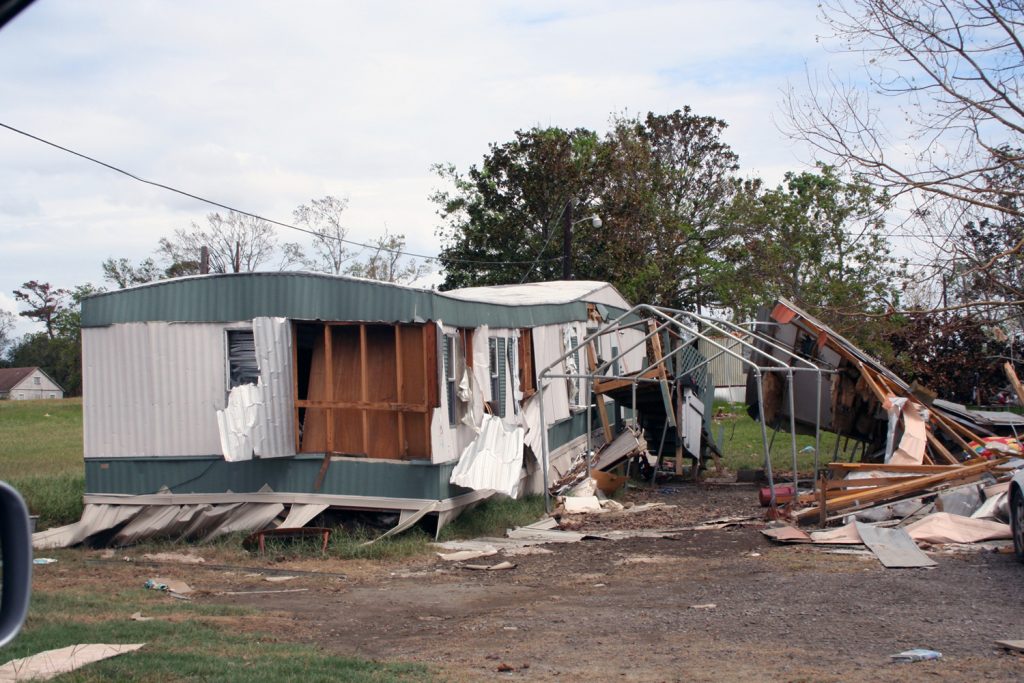
another-mobile-home-victim-of-katrina-1560379-1024x683Hurricane Katrina wreaked havoc on Louisiana in 2005.  As a result of the storm insurance claim litigation continued on for years thereafter.  In Louisiana there are short deadlines for filing a lawsuit if you believe you were treated unfairly by your insurance company.  If you do not file your lawsuit on time you might be met with a Motion to Dismiss, as was Lionel Williams who sued Louisiana Citizens Property Insurance Company for claims of mishandling of his Hurricane Katrina insurance claims.
Lionel Williams, of Reserve, Louisiana, sued Louisiana Citizens Property Insurance Corporation (“Citizens”) in state court for claims relating to Citizens’ handling of his insurance claims for property damaged by Hurricane Katrina.  Mr. Williams did not file his lawsuit until September 20, 2011.  After receiving the lawsuit Citizens filed an exception of prescription. Prescription is the set of procedural rules in Louisiana that dictate how long a person has to file a lawsuit after being harmed.  So, in filing an “exception of prescription” what the Citizens was seeking to do was to get Mr. Williams case thrown out of court before any trial of the facts occurred.  To defend against the prescription exception Mr. Williams alleged that he was a putative member of several class actions, that he had not opted out of the class actions, and that because he was a member of those various class actions prescription was suspended in his case. Because Mr. Williams alleged he was a class member of several class actions the trial court was forced to look at the claims made and procedural posture of all of those cases and then make a decision as to what claims could survive in Mr. Williams case.  Some claims were dismissed and some were allowed to continue on.

In hoping that the appellate court would overrule the dismissal of his certain claims of his lawsuit, Mr. Williams first argued that he was a member of various class actions filed after Hurricane Katrina.  La. C.C.P. art. 596(A)  provides that a class action lawsuit suspends prescription as to all members of the class. That statute further provides that this suspension continues until 30 days after one of three events occurs: “1) a person elects to be excluded from the class by submitting an election form; 2) a person is excluded from the class by the redefinition or restriction of the class (and notice is issued); or 3) the action is dismissed, the demand for class relief is stricken, or class certification is revoked or refused (and notice is issued).” These three “statutory triggers” are exclusive. Unless one of these “statutory triggers” are present, the prescription period continues to be suspended.

car-crash-1451085-1024x686Insurance policies can be difficult to understand. Litigating disputes arising from insurance policies can be even more difficult because the court must look not only at the policy itself to decide the case but must also consider which state’s law to apply to the case. The complexity of insurance cases makes it important to seek the services of an attorney familiar with the nuances of insurance litigation.

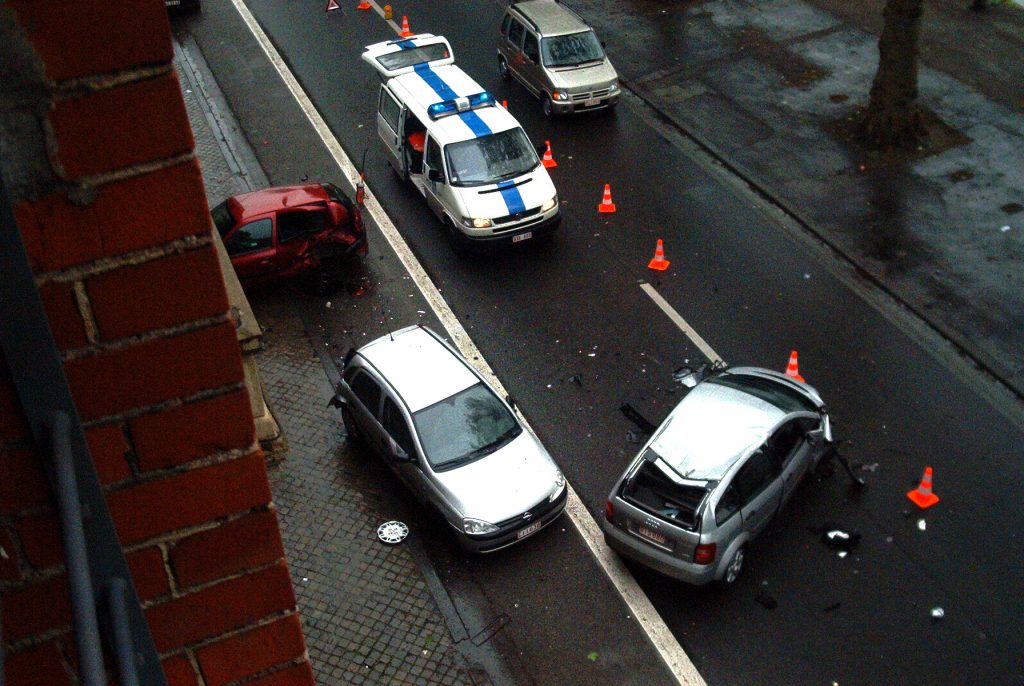
Monica Rios was a passenger in a car, driven and owned by Mr. Eddy Reyes, that was involved in an accident in New Orleans, Louisiana. The other car involved in the accident was being driven at the time by an excluded driver for that car’s insurance policy. The insurance provider for that car, Gramercy Insurance Company, pointed out that not only was the driver of the vehicle a named excluded driver that also the policy had lapsed due to non-payment prior to the accident. As a result, Gramercy was released from any liability.

Ms. Rios had also filed a claim for uninsured/underinsured motorist (UM) coverage under Mr. Reyes’ insurance policy issued by United Automobile Insurance Company. UM is intended to compensate the insured customer when the driver who caused the accident is either uninsured or their insurance does not cover the damages. In this case, since Gramercy had been released from liability by the court, Ms. Rios looked to United, Mr. Reyes’ insurer, for relief.

car-accident-2-1449295-1-1024x681A rear-end collision in Opelousas has led to a demonstration on how complex lawsuits concerning insurance companies can be. The Third Circuit Court of Appeal reversed a trial court’s decision regarding damages suffered in the accident, focusing on the amount owed to the plaintiffs by two different insurance companies.

The facts of the case are as follows: a vehicle operated by Ms. Rodgers, insured by Allstate Insurance, and owned by a Ms. Kennerson, rear-ended a vehicle operated by Ms. Bell, insured by Progressive Insurance, and owned by Compass LLC. The vehicle operated by Ms. Bell had an additional five passengers in the vehicle, while Ms. Rodgers was the sole occupant of the vehicle she was operating. Three of the passengers in Ms. Bell’s vehicle filed a Petition for Damages alleging entitlement to Uninsured Motorist Coverage (UM), naming Progressive as a defendant in its capacity as the UM insurer of the vehicle Bell was driing when the accident occurred. The other two passengers in Ms. Bell’s vehicle filed a Petition for Intervention, also naming Progressive as a defendant. Finally, Ms. Bell filed a Petition for Intervention, naming Rodgers, Allstate, and Progressive as defendants.

Compass LLC had purchased a combined single limit (CSL) auto insurance policy from Progressive which provided liability coverage in the amount of $1 million. In 2007, a Compass representative executed an Uninsured/Underinsured Motorist Bodily Injury (UMBI) Coverage Form issued by the Commissioner of Insurance in compliance with La. R.S. 22:680. The representative would testify he did not recall executing the form but identified his initials and signature on the form as his own. The form declared the representative selected UMBI Coverage to compensate for economic and non-economic losses with limits lower than any Bodily Injury Liability Coverage limits. Additionally, the term “$100,000” was inserted in a black preceding “each person”, with the word “person” scratched out and replaced by “CSL”.

big-rig-1495770-768x1024
When seeking legal relief, plaintiffs will face procedural hurdles during litigation. Defendants can and will often use procedural mechanisms to avoid liability for claims brought against them. This is the nature of the game, and skilled attorneys are masters of the rules governing the conduct of civil trials. Procedural law differs from substantive law (i.e. torts, contracts, property) in that the former provides the rules for applying substantive law for live disputes. Procedural mechanisms set guidelines for what evidence the court may hear, how evidence should be interpreted, and burdens of proof. One such procedural mechanism commonly used by litigants is the “motion for summary judgment.” A recent decision of the Louisiana First Circuit Court of Appeal discusses the motion for summary judgment and the requisite burdens of proof for parties filing or opposing such motions.

On March 11, 2006, a tanker truck belonging to John Williams was delivering fuel to Mr. Preston Payton’s dredging operation near Independence, Louisiana when it picked up a cable securing the dredge in the gravel pit. The dredge sunk beneath the murky water. Mr. Payton filed a lawsuit against named defendants Mr. Williams; Republic Vanguard Insurance Company, Mr. Williams’ insurer; Texas General Agency, Republic Vanguards adjusting agency; and Randy Anny, who leased the gravel pit where the accident took place. Mr. Payton’s Petition claimed that the defendants entered into a settlement agreement with him and agreed to pay him $256,714.86 as replacement for his dredge. Mr. Payton’s Petition also claimed that instead of paying him directly, Republic Vanguard and Texas General made the settlement check payable to Mr. Anny, who was obligated to pay Mr. Payton. According to Mr. Payton’s petition, the check used by Mr. Anny to pay him was drawn from an account with insufficient funds.

The Trial Court granted Republic Vanguard’s and Texas General’s motion for summary judgment which alleged that Mr. Payton failed to produce sufficient evidence showing that Mr. Anny acted as their agent. Mr. Payton appealed.

golden-coins-1426194-1024x768In Louisiana the owners of motor vehicles are required by law to maintain a minimum amount of insurance in case of a collision.  That’s the law and there is no getting around it.  The rational behind it is simple, if you crash your car into someone else there needs to be at least a minimum amount that can be recovered by the other person.  The consequences of not following that law is a bar from recovering the first $15,000 for your injuries and the first $25,000 of any property damage that you incur if you are in a wreck and it’s not your fault.  Those penalties are harsh,  but what happens if you fail to maintain insurance and you still have a note on your vehicle?  Is the note holder left out in the cold for that first $25,000 to repair the car as well?  The following case out of Baton Rouge Louisiana demonstrates what happens in those circumstances.

M&M Financial Services, Inc. held a security interest in Sheilda Hayes’ vehicle and was owed a balance of $11,446.80 on its promissory note.   Unfortunately for Ms. Hayes while driving her that vehicle without insurance Jerry Richard collided with her. Richard was insured by National Automotive Insurance Company, so M&M filed a lawsuit in Baton Rouge seeking to recover the remaining balance on the Hayes’ destroyed vehicle, plus legal interest and attorney fees. Both parties filed motions for summary judgment. In those motions the litigants sought to narrow the issues before the trial court. The defendants, Richard and National, argued that M&M was not entitled to the remaining balance on its note because of Louisiana’s “No Pay, No Play” law which bars recovery for the first $25,000 in property damages sustained by an owner or operator of an uninsured vehicle involved in an accident.  Louisiana Revised Statute 32:866.  However, the trial court didn’t buy that argument and ruled in favor of M&M and granted them their balance of $11,446.80, plus legal interest and attorney fees.

The case was appealed before the 1st Circuit Court of Appeal in Baton Rouge.  The appellate court reversed the judgment in favor of M&M and instead granted the defendants’ motion dismissing the case with prejudice. The appellate court ruled that no issues of material fact are present in this case because all of the parties agree that M&M held a security interest in Hayes’ vehicle and that the vehicle was uninsured at the time of the accident. Therefore, M&M’s financial right is a question of law turning on the interpretation of Louisiana statutes.  The appeals court then went on to evaluate those statutes and discussed how they applied to this facts of this case.

california-7-1557119-1-768x1024Louisiana is a “Direct Action State” which means that an injured party has the option to sue an insurer for coverage under someone else’s policy.  See La. Rev. Stat. 22:1269.  Therefore it’s permissible in Louisiana to name the insurance company of the tortfeasor when filing a lawsuit.  An example: John Doe believes he was injured by the fault of Jane Smith, he then files a lawsuit naming Jane Smith and her insurance company State Farm. (John Doe vs. Jane Smith and State Farm.) However, what if that insurer (State Farm) has an arbitration agreement with it’s insured (Jane Smith) that says all disputes must be arbitrated?  Will that cause the injured person (John Doe) to be forced into arbitration for his claims as well?  The following case arising out of East Baton Rouge parish shows how Louisiana Courts have dealt with just such a situation.
In November of 2011, Ronald and Angela Courville filed a medical malpractice claim against an East Baton Rouge Doctor and his clinic. Additionally, the Courvilles’ sued that doctor’s insurance company, Allied Professionals Insurance Company (APIC). APIC is an Arizona risk retention group created according to the Liability Risk Retention Act of 1986 (LRRA). Under a provision in the insurance contract between the doctor and APIC, it states any issues will be resolved through arbitration in California. APIC filed a motion to compel arbitration and stay the lawsuit.  A “stay” in the lawsuit essentially means that the Courville’s lawsuit would not be able to proceed in anyway. The trial court granted the motion to stay the matter and ordered all parties to submit to binding arbitration in California.  The Courville’s appealed that ruling to the Court of Appeal for the First Circuit of Louisiana.

The First Circuit reasoned, when a court decides the issue of arbitration the court must first decide whether the parties agreed to any kind of arbitration. Additionally, if the court finds the parties did consent to arbitration, the court looks to see if there are any federal standards which make an issue unable to be resolved using arbitration. Furthermore, in Louisiana, the court looks to two basic facts before ordering people to attend arbitration. First, whether there is a dispute as to the making of the agreement for arbitration, and second, whether a party has failed to comply with the arbitration agreement.

house-fire-3-1519596-1024x771In bringing or defending against a lawsuit, an important question is which court should hear the merits of the dispute, a state court or a federal court. Any court hearing the lawsuit must have “jurisdiction”; the power to hear a particular dispute. Under 28 U.S.C. § 1332, titled “diversity jurisdiction”, federal courts have original jurisdiction over all civil actions between citizens of different states and the amount in controversy (damages sought) exceed $75,000, exclusive of interest and costs. 28 U.S.C. § 1441 allows the defendants to remove civil actions from state courts to federal courts when a case becomes “removable,” i.e. when federal courts would have proper jurisdiction over the case. Skilled lawyers know that jurisdictional issues can have significant effect on the outcome of the case and understand the nuances of procedural posturing. A 2015 case from the Louisiana First Circuit Court of Appeal discusses how amendments or supplements to pleadings such as a Petition can raise important jurisdictional questions.  

On April 3, 2011, Jerry and Elnora Harris’s home in Springfield, Louisiana burned to ashes. A year later, the Harrises filed a lawsuit against Union National Fire Insurance Company for the payment of their policy limits, penalties, and attorney fees. In their petition against Union National, the Harrises asserted that the total amount of damages did not exceed $75,000.00 including attorney fees, penalties, and interest. On April 9, 2012, the Harrises amended their petition, adding as defendants Bank of New York Melon, successor-in-interest to J.P. Morgan Chase Bank. The Harrises’ Amended Petition alleged that the Defendants engaged in predatory lending and fraudulent practices and sought additional damages for mental anguish, damage to their credit, and attorney fees. The Amended Petition stated that the total amount of damages sought by the plaintiffs against all named defendants would not exceed $75,000.00 including attorney fees, penalties, and interest.

On November 15, 2013, after the Defendants filed exceptions and answered the Petition and Amended Petition, the Harrises filed a Second Amended Petition, asserting that the total amount of damages against all defendants would exceed $75,000.00. The Defendants countered by filing a motion to strike the Second Amended Petition from the record, or alternatively, set for a hearing. The Trial Court granted the Defendants’ motion and ordered that the Second Amended Petition be struck from the record. The Harrises then filed a motion to vacate that order and requested that the Trail Court reinstate their Second Amended petition. After a hearing, the Trial Court vacated the order dismissing the Harrises’ Second Amended Petition and imposed sanctions of the Defendants for filing a frivolous motion to strike.

Contact Information